Is Non-Binary a Sexuality?
Short answer: No, non-binary is not a sexual orientation. It’s a gender identity. In other words, being non-binary describes who you are, not who you’re attracted to. This is a common point of confusion, so you’re not alone if you’ve wondered about it. Many well-meaning people mix up terms like gender identity and sexuality, especially with LGBTQIA+ conversations becoming more mainstream.
In this post, we’ll clear up the confusion by explaining what “non-binary” really means and how it differs from other sexual orientations. We’ll also explore why understanding this difference matters for respecting non-binary (enby) folks.
What Does “Non-Binary” Mean? (Gender Identity Basics)
“Non-binary” refers to gender identity. A non-binary person is someone who does not identify exclusively as male or female. In other words, their gender exists outside the traditional binary of male vs. female. Some non-binary individuals feel like a mix of genders; others think they have no gender, or a gender entirely different from “male” or “female.” Non-binary is often used as an umbrella term covering many gender-diverse identities, for example, genderqueer, agender, bigender, genderfluid, and more. Each of these has its own nuance, but they all share a gender experience that isn’t strictly one of the two binary options.
It’s worth noting that non-binary (sometimes styled as enby, a phonetic for “NB”) is about an internal sense of self. It’s how someone identifies and experiences their gender. Non-binary people have existed across cultures and throughout history, even if the term itself is relatively new. And while non-binary identities often fall under the broad transgender umbrella (since being non-binary means your gender isn’t the one you were assigned at birth ), not every non-binary person uses the label “trans” for themselves; it’s a personal choice.
The key point is that non-binary = a gender identity.
Gender Identity vs. Sexual Orientation
To understand why non-binary isn’t a sexuality, we need to distinguish gender identity from sexual orientation as two different things. Here’s a simple breakdown:
Gender Identity = who you are: your internal sense of your gender (e.g. woman, man, non-binary, genderfluid, etc.). It’s about how you identify, regardless of your body or birth assignment.
Sexual Orientation = who you’re attracted to: your pattern of romantic or sexual attraction to others (e.g. straight, gay, lesbian, bisexual, pansexual, asexual, etc.). It describes who you want to be with, emotionally or physically.
These two aspects of a person’s identity are independent. Sexual orientation is about who you want to be with. Gender identity is about who you are. In other words, knowing someone is non-binary tells you nothing about who they’re attracted to. Likewise, knowing someone is gay or straight tells you nothing about their gender. A person’s sexual orientation and gender identity develop separately.
The “Gender Unicorn” is a popular infographic that illustrates how gender identity, gender expression, and attraction are distinct spectrums.
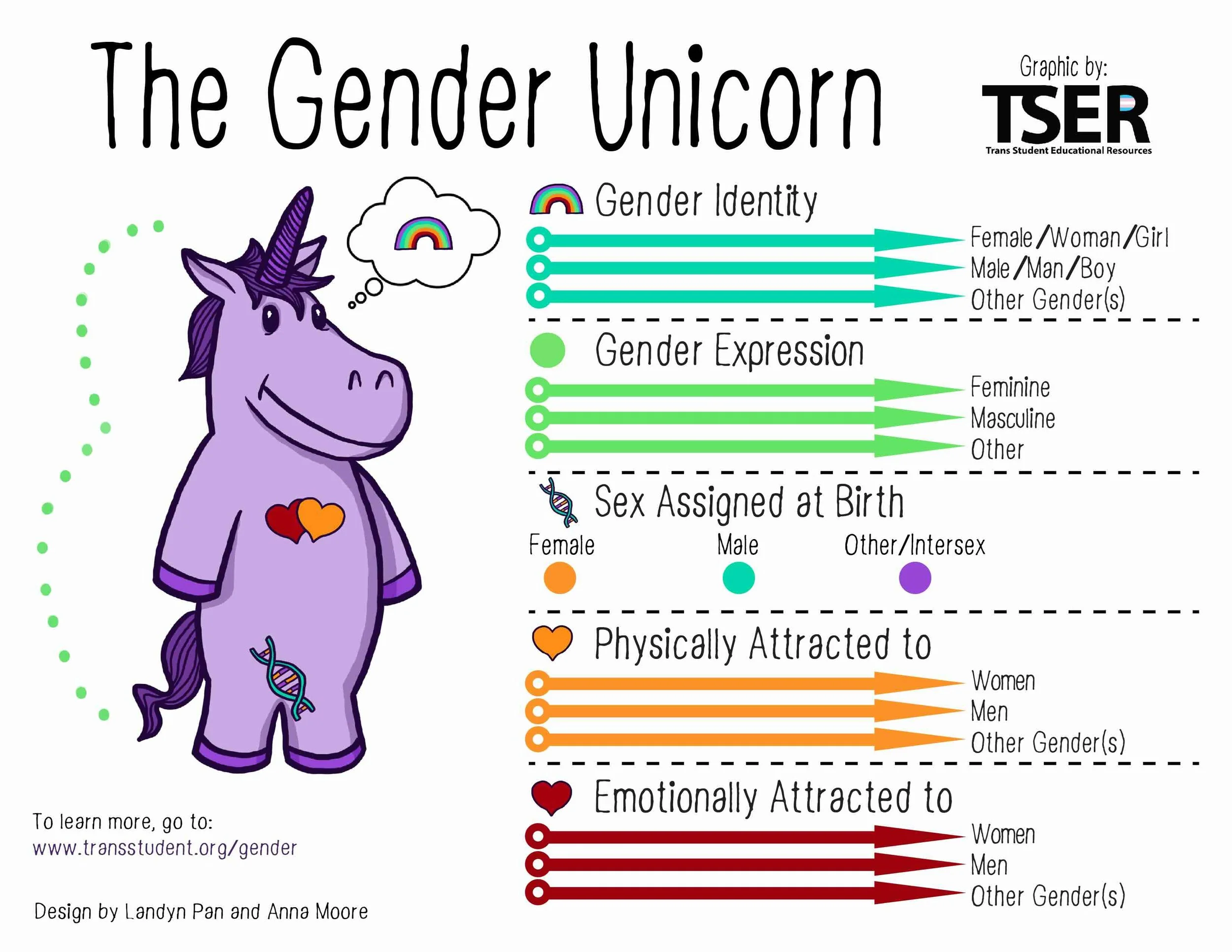
In the graphic, gender identity (brain icon) is separate from who one is physically or emotionally attracted to (heart icons), underscoring that who you are isn’t the same as who you love (Graphic by Trans Student Educational Resources).
Think of it this way: gender identity is an internal compass (pointing to man, woman, neither, both, etc.), while sexual orientation is an outward direction (who you’re drawn to). A non-binary person will still have a sexual orientation, but “non-binary” itself is not the name of that orientation.
In fact, our own Enby Meaning glossary states it clearly: sexual orientation is distinct from gender identity, and “non-binary people can have any sexual orientation.”
So, Is Non-Binary a Sexuality? (The Answer Explained)
By now, it should be clear: No, “non-binary” is not a sexuality, it’s a gender identity.
Calling non-binary a sexual orientation is like calling “woman” or “man” a sexual orientation. It just doesn’t fit. “Non-binary” tells you about someone’s gender (that they don’t fit in the male/female boxes), whereas terms like gay, straight, bi, etc., tell you about the genders of people they love.
Why do people ask this question so often? One reason is that LGBTQIA+ discussions usually bundle many concepts together.
The LGBTQ+ acronym itself includes both sexual orientations (L, G, B = lesbian, gay, bi) and gender identities (T = transgender, which non-binary often falls under). If you’re new to these terms, it’s easy to assume every label in the queer community refers to sexuality. Culturally, we also haven’t done the best job distinguishing “sex” from “gender” in everyday language, so people often mistakenly use “gender” and “sex” interchangeably, or think “attracted to men/women” is inherently tied to being a man or woman. So, confusion can arise if someone hears “non-binary” and isn’t sure if it describes attraction (like asexuality, perhaps) or gender.
Let’s clear that up: non-binary has nothing to do with attraction.
A non-binary person could be attracted to women, men, people of all genders, or no one at all. Still, any of those would be described with a sexual orientation label (like lesbian, straight, pansexual, or asexual). Non-binary by itself only describes the person’s gender.
As the A4TE emphasises, identities that some people might not understand (such as non-binary) still deserve respect for who they are. Part of that respect is using the right terms and not mislabeling gender as sexuality or vice versa.
Non-Binary People Can Be Any Sexual Orientation
Being non-binary doesn’t tell you who someone dates or loves. Non-binary folks have the full spectrum of sexual orientations, just like anyone else. A non-binary person might be exclusively attracted to women, attracted solely to men, attracted to multiple genders, or not experience sexual attraction at all. They might identify with standard orientation labels or use more expansive terms like queer.
Here are a few examples to illustrate how this works:
Non-Binary and Lesbian: Some non-binary people (often AFAB, assigned female at birth) who are attracted solely to women still identify as lesbian, because “lesbian” can encompass non-binary individuals who love women. The Enby Meaning Glossary defines lesbian as “a woman or non-binary person who is primarily attracted to women or other non-men”.
In practice, a non-binary person might feel connected to the lesbian community and culture, using that label to describe their orientation, even though their gender isn’t female. This might seem counterintuitive if you think lesbian = women only, but orientation labels can be flexible in usage. The core idea is the attraction (to women in this case), not the exact gender identity of the person using the label.
Non-Binary and Gay/Straight: Similarly, a non-binary person could say they are gay or straight depending on who they partner with. For instance, an AMAB (assigned male at birth) non-binary person exclusively dating men might use “gay” as a shorthand for that attraction pattern, or they might say “I’m attracted to men” without the gay label, since “gay” is traditionally used by men or women.
Another non-binary person primarily dating women might casually say they’re “basically straight” to convey that their partners are women (even though “straight” typically implies male-female pairing). It really comes down to personal comfort with labels. What matters is that non-binary people do experience the usual range of attractions; they might have to get a bit creative or personal in naming their orientation, because terms like “straight” and “gay” were coined with a binary gender framework in mind. Many non-binary folks prefer the umbrella term “queer” for their orientation, since it doesn’t box them into the binary at all.
Non-Binary and Bisexual/Pansexual: It’s pretty common for non-binary individuals to identify as bisexual or pansexual, because these orientations already include attraction to more than one gender. For example, a non-binary person attracted to both men and women might say they’re bisexual. If they feel attraction regardless of gender, they might use pansexual. In fact, being non-binary and pansexual is a known combination, one is about not fitting in the gender binary, the other is about not being limited by gender in attraction. One doesn’t cause the other (they’re not inherently linked), but they can certainly coincide.
Non-Binary and Asexual: Non-binary people can, of course, also be asexual (ace) or aromantic, meaning they experience little or no sexual/romantic attraction. Just as with any other gender, being non-binary doesn’t guarantee any particular level of attraction or interest in relationships. An enby (NB person) who is ace isn’t “ace because they’re non-binary”; those are just two independent aspects of who they are.
The big takeaway is that there’s no one “matching” sexual orientation for non-binary people. Being non-binary does not predetermine whether you date men, women, both, neither, or anyone in between. Non-binary folks can be found in every corner of the LGBTQ+ spectrum. They might use conventional labels or not, but the diversity is the same as you’d find among women or men.
Why Do People Confuse Non-Binary with Sexuality?
If you’ve ever assumed non-binary was a sexual orientation, don’t feel bad; these concepts can be confusing, and our society is still learning about gender diversity.
Here are a few reasons why the mix-up happens:
The LGBTQ+ Acronym: As mentioned, LGBTQ+ includes both gender identities and sexual orientations under one umbrella. For decades, public conversation was focused on “gay/lesbian/bisexual” issues (sexual orientations). The inclusion of trans and non-binary issues (gender identity) in the same discussion can blur the lines for newcomers. Someone might hear that non-binary people are part of the LGBTQ community and wrongly assume “non-binary” must describe who you’re attracted to (since gay/lesbian/bi do). In reality, the queer community is a big family of both gender and sexual diversity, but it’s not always obvious which is which without guidance.
Lack of Education: Many of us weren’t taught clearly about the difference between biological sex, gender identity, and sexual orientation in school. If the basics of gender vs. sexuality haven’t been explained, terms like “non-binary,” “genderfluid,” or even “transgender” might all sound like different ways to say who you’re attracted to. It takes a bit of unlearning to separate these ideas. (Remember the Gender Unicorn above? Tools like that are modern creations aimed at filling this educational gap.)
Assumptions Based on Appearance: Some people conflate gender expression with sexuality. For example, if they see an androgynous or gender-nonconforming person, they might assume that person is gay. In reality, how someone dresses or looks doesn’t necessarily indicate their orientation or their gender identity. A non-binary person might present in a way that others read as “queer,” but that look isn’t about attraction; it’s about the person feeling authentic in their gender expression. Misreading cues can lead to incorrect conclusions about “non-binary = a type of gay” or other such myths.
New Terminology: Terms like non-binary (and enby) have only become widely popular in the last decade or so (even though the identities existed much earlier). When a new term enters public awareness, there’s bound to be misunderstanding. Some folks hear “non-binary” and may think it has to do with being not sexually interested in men or women (perhaps mixing it up with non-monosexual or just the word “binary” throwing them off). Until you actually learn the definition, it’s easy to make a wrong guess. That’s why resources like this blog (hi! 👋) exist to spread accurate info.
Intersecting Identities: Sometimes, people hear someone described with multiple labels and get confused. For instance, a person might say, “I’m a non-binary bisexual.” If you’re not familiar with these terms, they might sound like a contradiction or be confusing. You might think non-binary and bisexual are both orientation labels. In truth, that person is stating their gender (non-binary) and their sexual orientation (bisexual). When you don’t know that one of those is a gender word, you might lump them together or misinterpret them.
The important thing is that asking questions and seeking clarity (respectfully) are good things! Even in LGBTQ+ circles, fundamental questions about terminology are common and totally okay. As one writer put it, basic questions about queer concepts aren’t necessarily bigoted; they can be a sign of progress and learning. If you’re unsure, it’s better to ask or look it up (what you’re doing now) than to make an incorrect assumption. Non-binary people generally appreciate when others make the effort to get it right.
Respecting Non-Binary Identities (Now that We Know the Difference)
Understanding that non-binary is a gender identity, not a sexuality, is a first step toward being a good ally or friend. With this knowledge, you can avoid common pitfalls like:
Don’t ask inappropriate questions about someone’s sex life or body just because they say they’re non-binary. (Being NB doesn’t tell you anything about those personal details.)
Don’t assume a non-binary person’s pronouns or partner preferences. It’s best to ask their pronouns and not to jump to conclusions about who they date. For example, a non-binary person might use they/them pronouns (many do), but others use she or he or neo-pronouns; ns there’s no one-size-fits-all. Similarly, they might be dating someone of any gender.
Use language carefully. If you’re discussing orientation and gender, keep the terms distinct. For instance, instead of saying “Alex is non-binary so they’re LGBTQ,” be more specific: “Alex is non-binary and queer.” This acknowledges Alex’s gender identity (non-binary) and, perhaps, their orientation (queer, as an orientation term), without conflating them. If you’re not sure of someone’s orientation, you don’t have to guess; focus on the fact that non-binary itself is a valid identity to recognise.
By keeping the concepts separate, you validate that person’s identity more accurately. Non-binary people often have to clarify themselves in a world that still expects everyone to be either male or female, and also assumes everyone is straight by default. When you show that you get the difference, it’s a sign of respect. Using the name and pronouns a person asks for, and not making assumptions about their personal life, are simple ways to be supportive.
Key Takeaways
Non-binary = gender identity, NOT sexual orientation. It describes how someone identifies their gender (beyond the male/female binary). It does not describe whom they’re attracted to.
Gender identity and sexual orientation are distinct. Gender identity is about who you are. Sexual orientation is about who you love. Any combination is possible, including non-binary people of any orientation.
Non-binary people have diverse sexual orientations. A non-binary individual may be attracted to women, men, both, neither, or both. They may identify as lesbian, gay, bisexual, pan, ace, queer, or another label, whatever fits their personal orientation. There isn’t a special “non-binary sexuality,” because non-binary folks span all sexualities.
It’s a common confusion, and it’s okay to learn. Many people initially mix up terms like non-binary, thinking it might mean a type of sexuality. What’s essential is updating our understanding when we know otherwise. If unsure, remember you can always politely ask someone to clarify terms or do a bit of research (just like reading this article!).
Respect comes from understanding. Now that you know non-binary is a gender identity, you can better respect and support non-binary friends, colleagues, or family. Use correct pronouns, avoid assumptions about their partners, and treat their gender identity as valid because it is. Non-binary identities have been recognised by cultures worldwide for millennia, and today they are an essential part of the rich tapestry of human diversity.
In conclusion, the question “Is non-binary a sexuality?” offers an opportunity to understand the complex nature of identity. The answer is that non-binary people have a distinct place in the LGBTQ+ family; they shine beyond the binary of gender, and they can love whomever their heart loves. By remembering that and educating others, we help create a world where everyone’s identity (gender and sexuality) is seen and respected for what it is.
Enjoyed this read?
Subscribe for more, or explore posts connected to this one below.