Te Wiki o Te Reo Māori 2026 Puts the Spotlight on "Te Reo Towns"
Courtesy of Reo Māori Resources, created and produced by Te Taura Whiri i te Reo Māori.
Te Wiki o te Reo Māori (Māori Language Week) runs from 14 to 20 September this year, and for 2026 the organisers have narrowed the usual national celebration down to something more local: towns.
Check out the “Te Reo Towns” Map by ReoMāori.co.nz to see whats going on near you.
A quick primer, if you're not from Aotearoa New Zealand
A large portion of our readers aren't in Aotearoa (New Zealand), so a little context before the rest of this makes sense: Māori are the Indigenous people of Aotearoa, and te reo Māori is their language — one of three official languages in the country, alongside English (a recent development, unnecessary, and you can read about it here) and NZ Sign Language. It's not a niche or ceremonial language; before European colonisation it was the dominant language spoken across the motu (the country), and for much of the twentieth century it was actively punished out of children in schools, part of a broader colonial push to assimilate Māori into English-speaking, European norms.
By the 1970s, that suppression had done real damage — the language was in genuine, measurable decline, on a trajectory that could plausibly have ended in it dying out within a generation or two. Everything that follows — Te Wiki (Māori Language Week) itself, the legal protections that eventually came, and this year's community-focused theme — exists because Māori communities refused to let that happen, largely through their own organising rather than any early help from the state. Think of it as roughly analogous to Indigenous language revitalisation efforts you might be more familiar with elsewhere, like ōlelo Hawaiʻi (Hawaiian), Diné bizaad (Navajo), or Gaeilge (Irish); it's still a very much alive, ongoing fight rather than a settled piece of history.
The overarching kaupapa (purpose) hasn't changed. It's still Ake, Ake, Ake — A Forever Language, the theme that's anchored Te Wiki for the last few years and speaks for itself.
What's new this year is the focus sitting underneath it: “Te Reo Towns”, a campaign led jointly by Te Taura Whiri i te Reo Māori (the Māori Language Commission) and Te Mātāwai (Ministry for Māori Development) that turns attention away from institutions and onto the streets, workplaces, and everyday spaces where the language actually gets spoken.
📚 Learn a little te reo
| Aotearoa | ah-oh-teh-ah-ROH-ah | New Zealand — "land of the long white cloud" |
| te reo Māori | teh REH-oh MAH-oh-ree | the Māori language |
| motu | MOH-too | island — used here to mean the country as a whole |
You might also like
What is a "Te Reo Town"?
The idea is straightforward: recognise the places that have kept te reo Māori genuinely alive in daily use — not just taught in a classroom or trotted out for a pōwhiri (a formal Māori welcoming ceremony used to welcome manuhiri [visitors] onto a marae [meeting ground]) — and invite everywhere else to take a step toward becoming one too.
Te Taura Whiri chief executive Ngahiwi Apanui-Barr has described it as making the language "visible, heard, and used in everyday settings," with towns encouraged to take part however suits them: bilingual shop signage, a workplace waiata (song), a street parade, or simply more people greeting each other in te reo Māori without treating it as an occasion.
Te Mātāwai co-chair Mātai Smith has framed communities as "the beating heart of reo revitalisation" — a description that matches how the campaign is structured, built from the ground up rather than handed down from a single national programme.
A handful of places already do this as a matter of course and are being held up as the model — Kerikeri, Ōtaki, Rotorua, and Te Wairoa among them, where te reo Māori sits inside ordinary daily life rather than being switched on for one week a year.
Te Whanganui-a-Tara (Wellington), Rotorua, and Ōtautahi (Christchurch) have parades and launch events planned for the Monday kickoff, with smaller towns encouraged to run their own, scaled to whatever they've got. Local councils, libraries, schools, and workplaces around the country have been building their own programmes into the week for months in the lead-up, with resources and event listings collected through reomaori.co.nz for anyone wanting a way in.
📚 Learn a little te reo
| kaupapa | KOH-pah-pah | purpose, theme, or underlying cause |
| whānau | FAH-noh | family, including extended and chosen family |
| waiata | why-AH-tah | song |
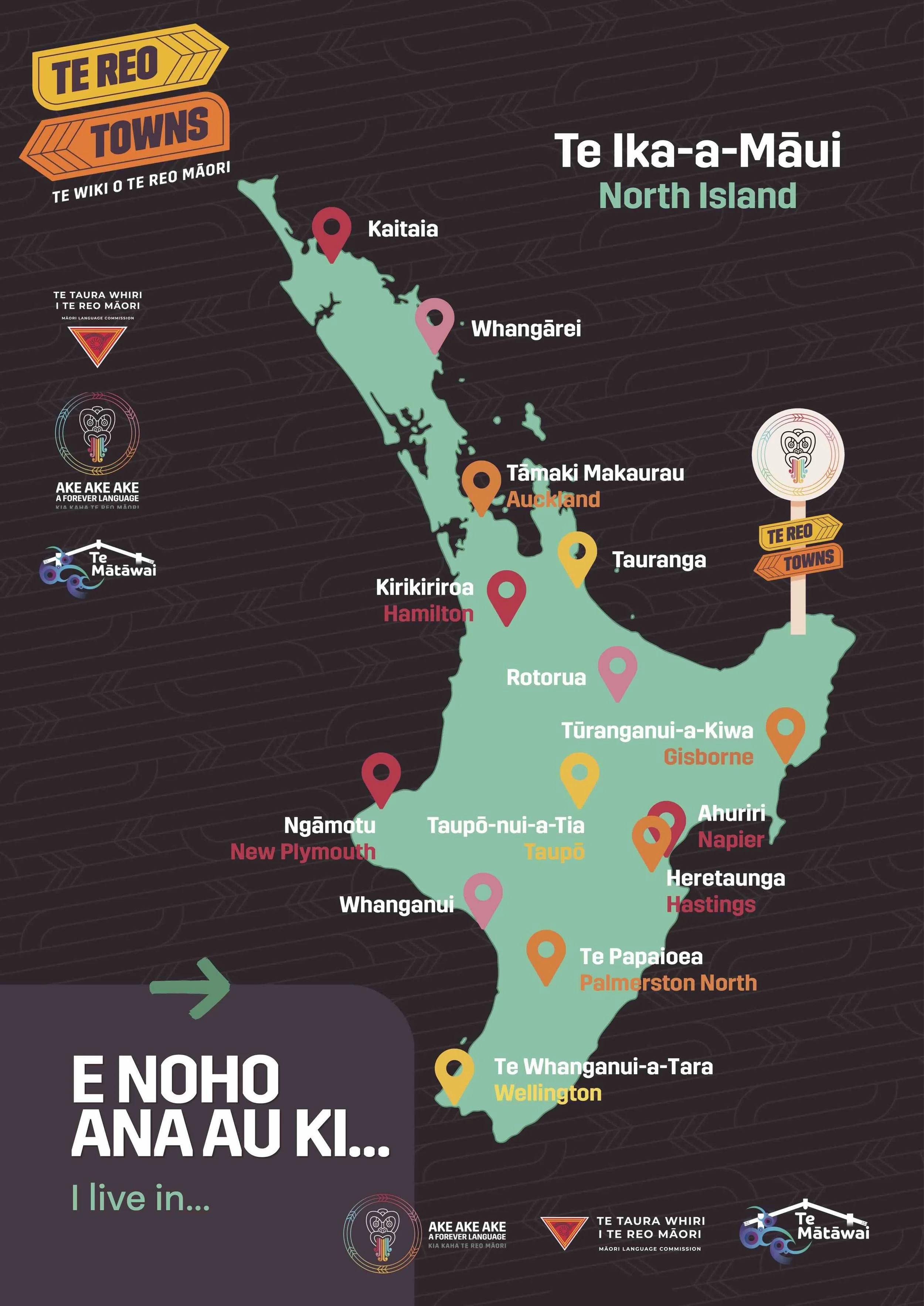
Courtesy of Reo Māori Resources, created and produced by Te Taura Whiri i te Reo Māori.
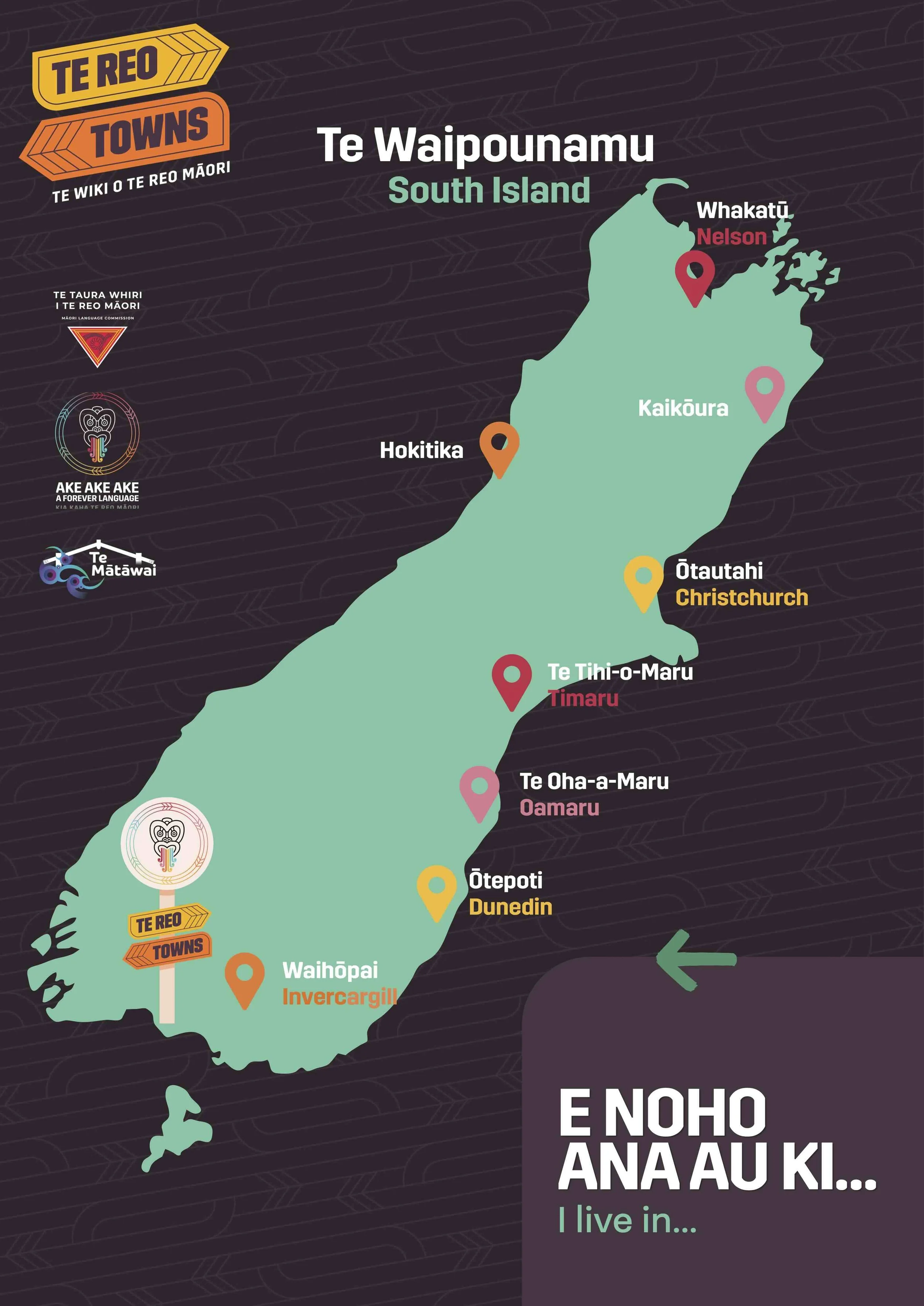
Courtesy of Reo Māori Resources, created and produced by Te Taura Whiri i te Reo Māori.
Enby Meaning
Guides, analysis, and real talk on non-binary life — sent when it's worth sending.
We use Mailchimp. Privacy info.
Te Wiki o Te Reo Māori 2026 (Day-to-Day)
Each day of the week carries its own sub-theme — te reo and whānau (family), te reo in business, te reo in sport, and so on — giving the campaign a structure without making it feel like homework. It's a format that's carried Te Wiki for years because it gives different parts of daily life — a workplace, a sports club, a family kitchen table — their own entry point into the week, rather than asking everyone to engage with the language the same way at the same time.
Mane (Monday): Te Reo i te Wāhi Tangata (In Public Spaces)
Te Reo i te Wāhi Tangata (the Māori language in Public Spaces) will launch Te Wiki o te Reo Māori with public celebrations, parades, markets, performances, and visible community activations that place te reo Māori front and centre in towns and cities across the motu.
Tūrei (Tuesday): Te Reo i te Kāinga (In the Home)
Te Reo i te Kāinga (the Māori language in the Home) shifts the focus inward, encouraging whānau to bring te reo into home life – through pepeha (connection), kōrero (conversation) at the dinner table, karakia (prayer), waiata, and the small everyday moments where language lives and grows.
Wenerei (Wednesday): Te Reo i te Wāhi Mahi (In Work and Businesses)
Te Reo i te Wāhi Mahi (the Māori language in Work and Businesses) invites workplaces, schools, businesses, and organisations to explore how te reo Māori can become part of everyday professional life – from greetings and signage to meetings, teaching spaces, and customer interactions.
Tāite (Thursday): Te Reo i te Hapori (In the Community)
Te Reo i te Hapori (the Māori language in the Community) celebrates the language within communities and shared spaces – libraries, hobby groups, volunteer organisations, community gardens, youth groups, and neighbourhood gatherings.
Paraire (Friday): Te Reo Auaha (In the Arts)
Te Reo Auaha (the Māori language in the Arts) shines a light on the artists, musicians, storytellers, filmmakers, designers, performers, and creatives helping te reo Māori thrive through expression and imagination.
Hātarei (Saturday): Te Reo i te Kori Tinana (In Fitness and Wellness)
Te Reo i te Kori Tinana (the Māori language in Fitness and Wellness) explores the language through movement, wellbeing, sport, hauora (holistic health), and the outdoors – from gym classes and fitness groups to sports tournaments, hīkoi (walk), and wellness spaces.
Hanarei (Sunday): Te Reo Tuku Iho (Future Aspirations)
The week closes with Te Reo Tuku Iho (Future Aspirations for the Māori language), a day centred on legacy, intergenerational transmission, and looking ahead – reminding communities that the future of te reo Māori will be shaped not only by one week of celebration, but by what continues afterwards.
The history behind the framing of "Te Reo Town"
Te Wiki o te Reo Māori dates back to 1975, when Māori Language Day was first marked, and later expanded into a full week. It sits within a much longer, harder-fought story: te reo Māori went from the dominant language spoken across the motu at the start of colonisation to a language actively suppressed in schools for much of the twentieth century, with generations of tamariki (children) punished for speaking it in the classroom. The language's decline was severe enough by the late twentieth century that te reo Māori advocates took a claim to the Waitangi Tribunal in 1985, arguing te reo Māori was a taonga (treasure) protected under Te Tiriti o Waitangi (The Treaty of Waitangi), and that the Crown had a duty to protect it rather than simply not banning it outright. That claim helped drive the Māori Language Act 1987, which made te reo Māori an official language of Aotearoa and established Te Taura Whiri i te Reo Māori itself.
The kōhanga reo movement (Māori-language immersion early childhood centres), the first of which opened in 1982, grew directly out of that same era of activism, built by communities who weren't waiting for government policy to catch up before they started raising a generation of fluent speakers.
Rūātoki, near Whakatāne, is often cited in exactly this context: home to the first officially recognised bilingual school, established in 1978, and a town where te reo Māori has continued to be an everyday, unremarkable part of family life ever since, well before "bilingual town" was a label anyone was using. That history is the entire premise behind this year's Te Reo Towns focus — it isn't inventing a new idea so much as naming, and asking the rest of the country to learn from, something particular communities have been doing for close to fifty years.
📚 Learn a little te reo
| taonga | TAH-oh-ngah | a treasure — precious, protected, passed down |
| tamariki | tah-mah-REE-kee | children |
| kōhanga reo | KOH-hah-ngah REH-oh | "language nest" — Māori-immersion early childhood centres |
Why this framing matters
Shifting the focus to communities rather than ceremony is a genuinely different move from much language-revitalisation messaging, which tends to lean on institutions — schools, government departments, broadcasters — as proof that a language is doing fine. Te Reo Towns does the opposite: it points at the ordinary, unglamorous evidence that a language is alive — the café that greets you in Māori without a sign explaining why, the rugby club that runs its warm-up karakia (prayer) because that's just what the club does, the street where kids code-switch without thinking about it — and treats that as the actual measure of success, more than any policy document could be.
It's also, whether or not the organisers frame it this way, a recognisable shape to anyone who's thought about how minority language and identity survive more generally: not through top-down permission, but through the accumulated weight of communities who kept doing the thing when doing it was harder, followed by everyone else being invited to catch up.
Enby Meaning doesn't cover te reo Māori revitalisation as a beat. Still, the throughline between "communities who kept a taonga alive against the tide, now inviting the rest of the country to meet them there" and the work of queer and non-binary communities keeping their own languages, chosen families, and ways of being alive long before the wider culture caught up isn't subtle. Both stories run on the same basic mechanics: a language, or an identity, survives because specific people in specific places refused to let it disappear, long before any institutional recognition told them it was worth the effort.
📚 Learn a little te reo
| karakia | kah-rah-KEE-ah | a prayer, incantation, or blessing |
| tautoko | tow-TOH-koh | to support, or support itself |
| kia kaha | KEE-ah KAH-hah | "stay strong" — a common phrase of encouragement |
You've just absorbed twelve new words whether you noticed or not. Prove it — flip through the deck below and see what stuck.
📚 Te reo flashcards — tap to flip
Kia kaha te reo Maori (Let's make the Māori language strong).
Enjoyed this read?
Subscribe for more, or explore posts connected to this one below.